After our visit to the Green Gables Heritage Place, we took a short drive to Rustico. Peter LeClair, Ed’s great-grandfather, was born in Rustico. The bay is the traditional and unceded territory of First Nations Mi’kmaq (pronounced mi’kmaw). The two arms surround a bay noted for oyster beds. Tabooetooetun is a historic site for seasonal Mi’kmaq camps.
Colonization of Rustico occurred when the British sought to expel Acadians in 1758. Original settlers seeking refuge included French-speaking families Blanchard, Buote, Doiron, Gaudet, Gauthro, LeBrun and Martin.
The current name of Rustico comes from one of the first French settlers, René Rassicot, originally from Avranches (Normandy) facing the Mont-Saint-Michel bay, who arrived in Port-LaJoye in 1724. He then settled in the Wheatley River estuary which flows into Rustico Bay. The first spellings “Racica” and “Racico” (used by enumerator de la Roque in 1752) gradually evolved into Rustico.
website Acadie created by Jean-Marc Agator and Jean-Pierre Bernier.
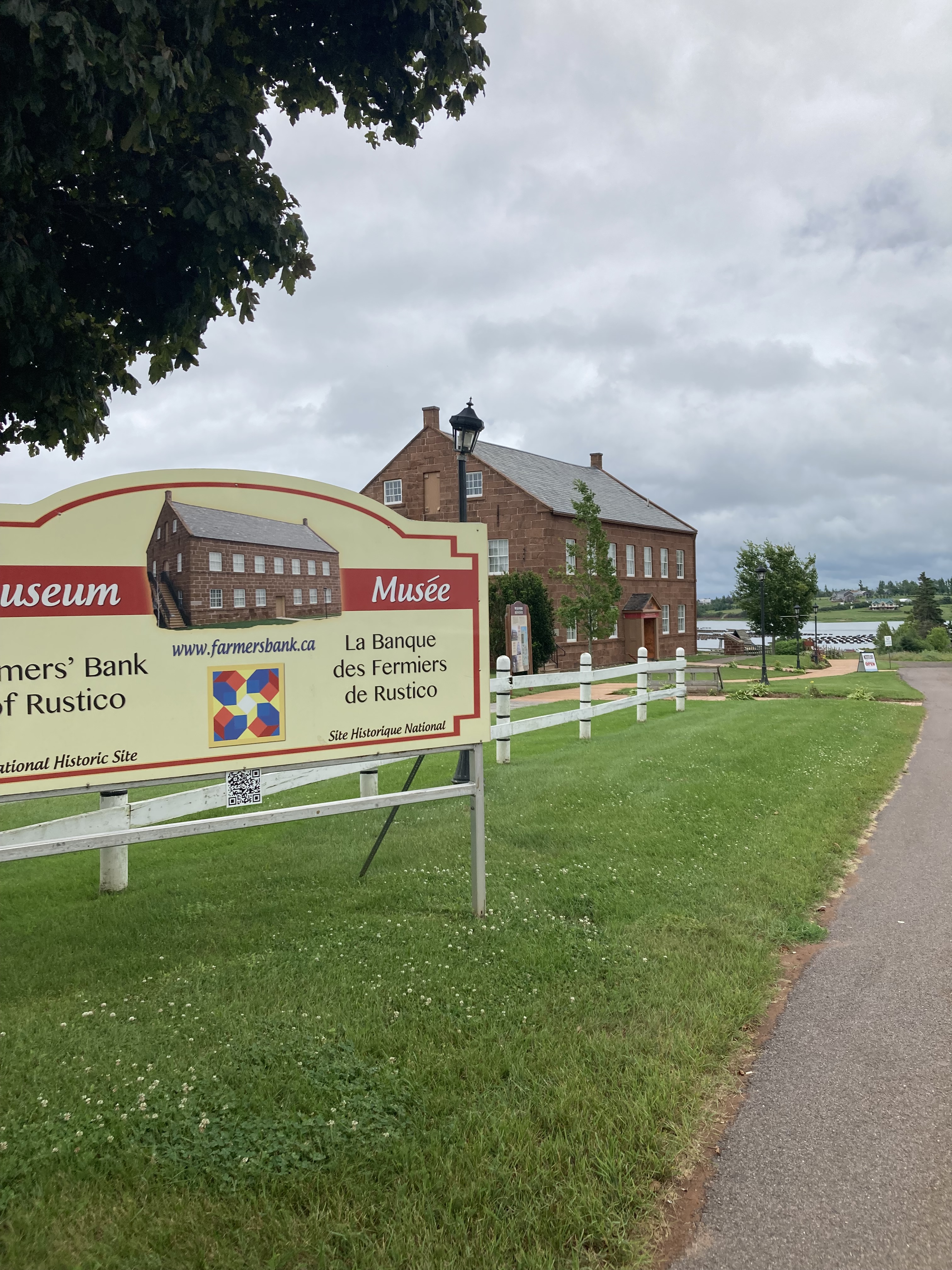

Arnold Smith (featured in the video below) was eager to tell us the history of Rustico. After we toured the museum and Doucet House, we popped into the Genealogy room. The museum holds church records and other historical documents. We were not prepared to conduct research-during this visit! Maybe another time.

 For Her Home